If it happens in the country where you live, you have an upset stomach. If you are visiting Mexico, it is Moctezuma’s Revenge, also known as turista. Experiencing new foods (some of them grown with classic compost), travel nerves, excitement, and adjustments in your normal intestinal flora and fauna can leave you vulnerable to bacteria that are everywhere, especially on fresh fruits and vegetables.
Even if you’re not vacationing or adjusting to life in a foreign country, you should be careful with all food, especially if it’s fresh. My Mexican mother-in-law taught me how to clean fruits and vegetables to cut down on some of that bacteria. From time to time, there are warnings in the United States about contaminated foods, with accompanying admonitions to be sure to wash your lettuce, strawberries, or whatever. Purifying your fruits and vegetables should be as habitual as brushing your teeth–maybe more so. In addition to the age-old germs, modern agriculture has further contaminated our foods with pesticides and waxy enhancers. A healthy immune system is the best defense against all kinds of illnesses, but some germs and chemicals are strong enough to break through even a healthy system, so it is wise to do what you can to keep them at bay.
- Wash your hands often, but certainly before you handle food.
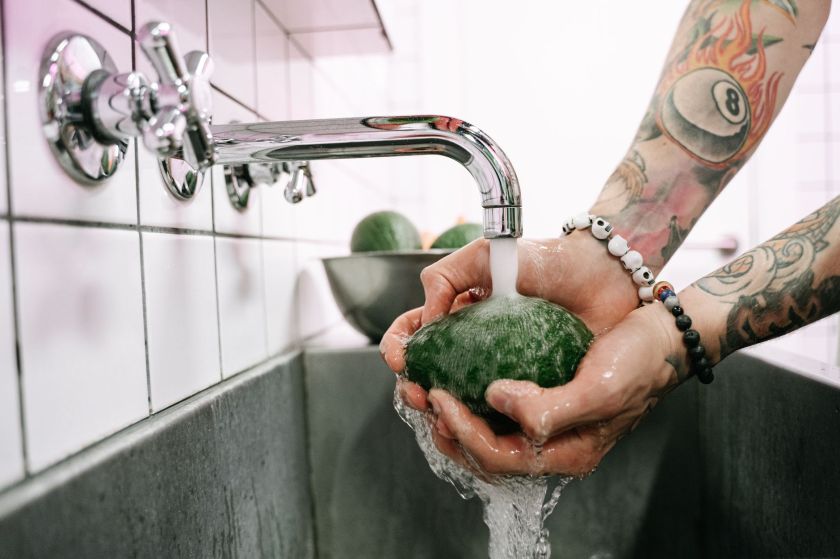
- If you are going to eat raw fruit or vegetables like apples, pears, or cucumbers, peeling and all, rinse in lukewarm water to soften up wax enhancers, then scrub well with a vegetable brush and rinse again in tap water. It is usually not necessary to use detergent or other cleaning agents. If I’m very concerned about contaminants, I just peel them. Some good fiber and nutrients are lost, so it’s a toss-up.
- If you are going to peel or cook fruits and vegetables, a good rinse is enough to get rid of surface dirt. If you are peeling a banana or a tangerine, remember that you can contaminate the edible part with your hands. Using a brush for gritty foods like potatoes or carrots is a good idea to get rid of plain old dirt that might cling to them. Cooking will kill the bacteria.
- If you are cutting something with a knife, like an avocado, cantaloupe or watermelon, rinse the outside well, and be sure the knife and cutting board are clean.
- Opinions vary about the best way to purify porous foods that are eaten as they are: lettuce, celery, all kinds of berries, especially strawberries, and so on. My choice is this: rinse, soak for at least five minutes in a solution of water with a tablespoon or two of white vinegar or lemon juice, rinse again, preferably with bottled water if you don’t drink water from the tap. I have seen recommendations for baking soda as well as salt for the soaking process, but I haven’t tried them. Vinegar has worked well for me for a long time.
- Always be careful to clean and sterilize surfaces and utensils that have been in contact with raw meat of any kind before cleaning or peeling fruits and vegetables with them.
No one wants to live in a sterile bubble, avoid travel, and never taste anything new or different, so you are sure to have a tummy ache once in awhile, but if you live healthily and take these precautions, you can keep sick days at a minimum.