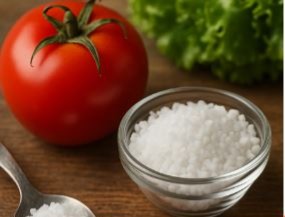
Chloride is an essential electrolyte that maintains body fluid balance, pH levels, and aids digestion (via hydrochloric acid in the stomach). Mainly consumed as salt (sodium chloride), it supports nerve/muscle cell function. High levels (hyperchloremia) cause dehydration or kidney issues, while low levels (hypochloremia) may cause weakness or irritability. As a major electrolyte (primarily in extracellular fluid), it works with sodium and potassium to balance fluids and maintain electric neutrality. It is critical for producing stomach acid for digestion and aids oxygen/carbon dioxide flow.
How much do I need?
Adequate Intake for adults is 2.3 grams daily.
Are supplements recommended?
Chloride imbalances, whether high or low levels are generally managed by addressing the underlying cause, such as rehydration, adjusting medication, or intravenous fluids,
What are some good plant food sources of chloride?
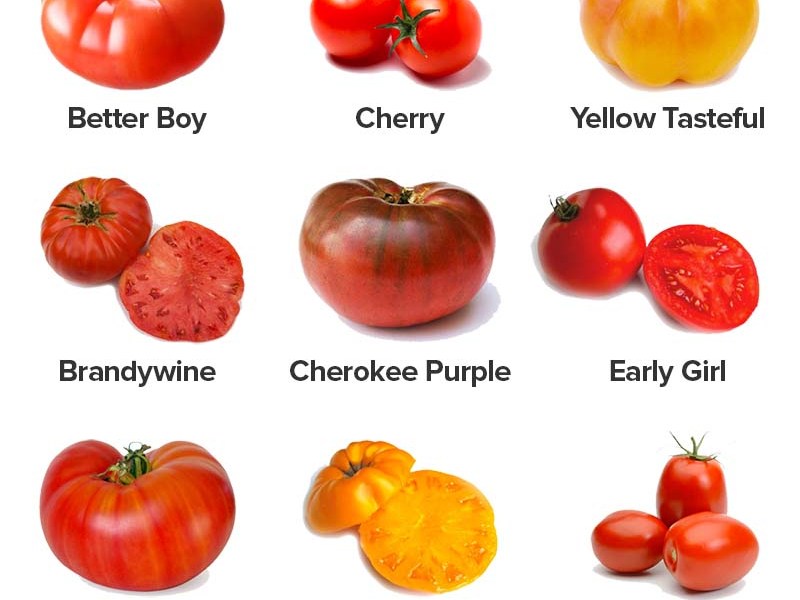
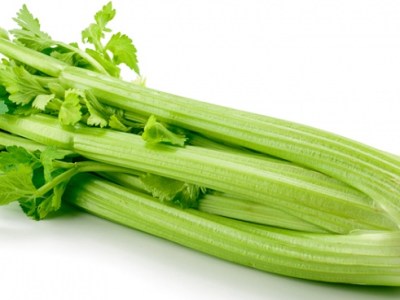
Primarily found in table salt (sodium chloride), but also in SEAWEED, TOMATOES, LETTUCE, CELERY, OLIVES.


2 thoughts on “CHLORIDE”
Comments are closed.