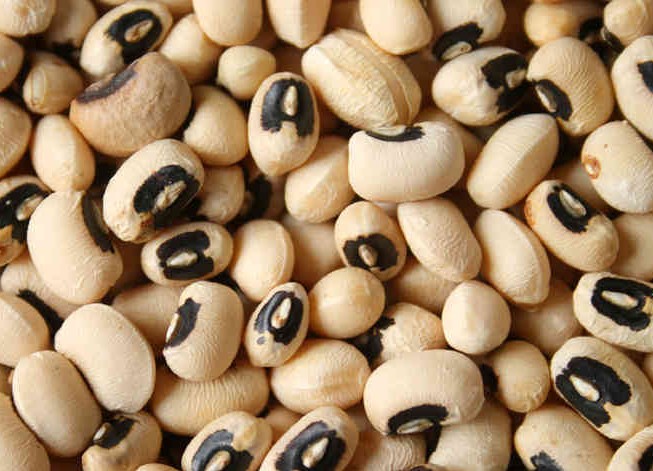
Black-eyed peas are rich in fiber, iron, folate, potassium and Vitamin A.
The black-eyed pea (español: guisante de ojo negro) (Vigna unguiculata), also called black-eyed bean, cowpea or southern pea, is an annual plant from the pea family (Fabaceae) and is grown for its edible legumes. Black-eyed peas get their name from their appearance. They’re cream-colored with a little black speck that resembles an eye. Although their name would make you think they’re a type of pea, black-eyed peas are actually beans.
Black-eyed peas have high levels of dietary fiber, which helps to promote regular bowel movements and improve digestive health. They are high in iron and in folate, a B vitamin needed to make normal red blood cells. Low levels of folate can cause anemia. Black-eyed peas are rich in potassium, a mineral that helps keep your blood pressure levels at healthy numbers and lowers your risk of heart disease. They are surprisingly high in vitamin A, with more than one-fourth of your daily vitamin A needs in one cup. Vitamin A helps maintain healthy skin and mucus membranes, and it produces the pigments in the retina of the eye. They are a great addition to stews, soups, curries and salads. They can also be a perfect side dish, or they can be mashed into a dip.
| 1 cup of black-eyed peas, cooked |
|---|
| calcium 211 mg (21% DV) |
| calories 160 |
| carbohydrates 36 g |
| fat 0.6 g |
| fiber 8.2 g |
| folate 210 mcg (52.5% DV) |
| iron 1.9 mg (10.6% DV) |
| magnesium 86 mg (22% DV) |
| niacin 2.3 mg (11.5% DV) |
| phosphorous 84 mg (8.4% DV) |
| potassium 690 mg (19.7% DV) |
| protein 5.2 g |
| riboflavin 0.2 mg (11.8% DV) |
| thiamine 02 mg (13.3% DV) |
| zinc 1.7 mg (11.3% DV) |
| vitamin A 1305 IU (26% DV) |
| vitamin B6 0.1 mg (5% DV) |


 Fruit & Stuff