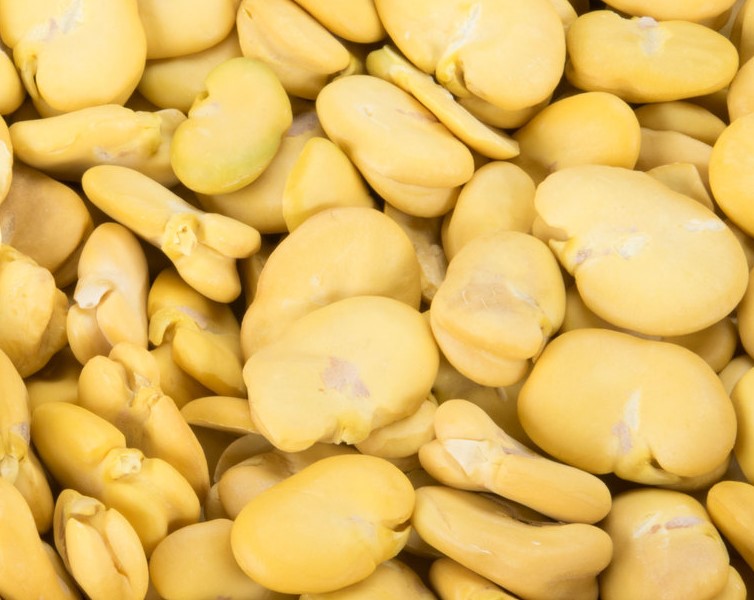
Fava beans are rich in iron, phosphorous, magnesium, and manganese. One serving packs 106% of the daily requirement of folates, important for preventing birth defects.
Fava beans, sometimes called horse beans or broad beans (español: habas) come from a species of flowering plant in the Fabaceae pea and bean family. It is widely cultivated as a crop for human consumption. Eating these beans regularly may have benefits for symptoms of Parkinson’s disease, help prevent birth defects, boost immunity, aid weight loss and lower cholesterol levels and blood pressure.
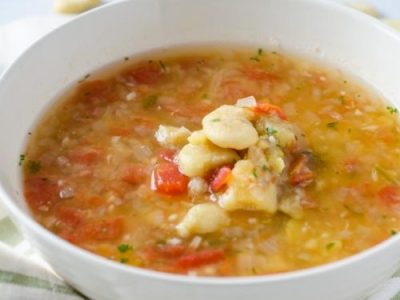
Fava Bean Soup Recipe
This traditional favorite is sometimes served in the place of frijoles.
| Nutrition: 3.5 oz (100 g) fava beans | %DV | |
|---|---|---|
| CARBOHYDRATE | 58.29 G | |
| CALORIES | 341 | |
| FAT | 1.53 G | |
| FIBER | 25 G | |
| PROTEIN | 26.12 G | |
| VITAMIN B1 (THIAMINE) | 41% | |
| VITAMIN B2 (RIBOFLAVIN) | 28% | |
| VITAMIN B3 (NIACIN) | 19% | |
| VITAMIN B6 | 28% | |
| VITAMIN B9 (FOLATE) | 106% | |
| CALCIUM | 10% | |
| COPPER | 41% | |
| IRON | 52% | |
| MAGNESIUM | 54% | |
| MANGANESE | 77% | |
| PHOSPHOROUS | 60% | |
| POTASSIUM | 23% | |
| SELENIUM | 12% | |
| ZINC | 33% |

 Fruit & Stuff