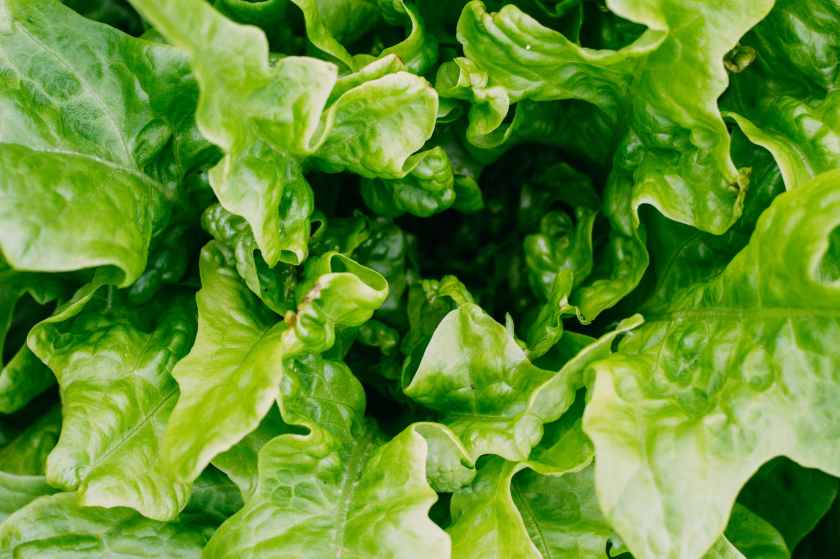
Lettuce is rich in antioxidants, folates, and Vitamins A and K.
Lettuce (Lactuca sativa) (Spanish: lechuga) is a popular leafy vegetable in the daisy family. It ranges in color from yellow to dark green, and some varieties have reddish hues. Lettuce is a major ingredient in salads, and it is a healthy addition to wraps, soups, and sandwiches. Romaine and iceberg are the most common types in western cuisine, but there are many more varieties with unique flavors and nutritional properties. Most types of lettuce are rich in Vitamin K, folates, and antioxidants.
- Crisphead lettuce, widely known as iceberg lettuce, is light, crunchy, and full of nutrients like folate and vitamin K.
- Romaine’s long, crisp leaves are popular for Caesar salads. It’s high in folate, potassium, antioxidants, and vitamins A and K.
- Butterhead lettuce has soft leaves and looks similar to cabbage. It’s particularly high in iron and vitamins A and K.
- Leaf lettuce has crisp, ruffled leaves. Both green and red types are high in folate, manganese, and vitamins A and K. Red leaf lettuce is higher in antioxidants.
For information about other types of lettuce, see this link: 18 Types of Lettuce
| 3.5 oz (100 g) | ICEBERG | ROMAINE | butterhead | LEAF LETTUCE |
|---|---|---|---|---|
| CALORIES | 14 | 17 | 13 | 15 |
| FIBER | 1 g | 2 g | 1 g | 1 g |
| PROTEIN | 1 g | 1 g | 1.5 g | 2 g |
| IRON | 2% DV | 5% DV | 8% DV | 5% DV |
| MANGANESE | 5.4 DV | 7% DV | 8% DV | 11% DV |
| POTASSIUM | 3% DV | 5% DV | 5% DV | 4% DV |
| VITAMIN A (RETINOL) | 3% DV | 48% DV | 18% DV | 41% DV |
| VITAMIN B9 (FOLATE) | 7% DV | 34% DV | 18% DV | 10% DV |
| VITAMIN C | 3% DV | 4% DV | 4% DV | 10% DV |
| VITAMIN K | 20% DV | 48% DV | 85% DV | 105% DV |
SOURCE: HEALTHLINE
 Fruit & Stuff