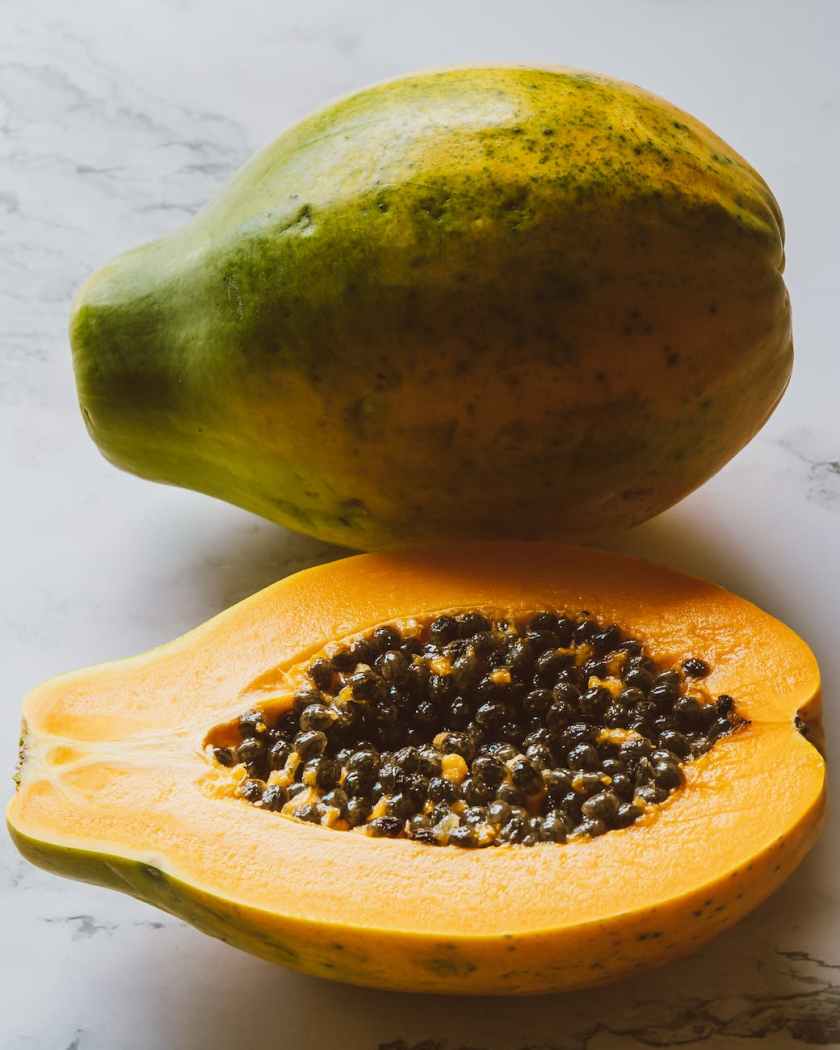
Rich in VITAMIN A, VITAMIN C, POTASSIUM, VITAMIN B9, LYCOPENE (antioxidant) and PAPAIN (enzyme).
Papaya is the fruit of the Carica papaya plant, which originated in Central America and Southern Mexico. Papaya contains papain, an enzyme which can break down the tough protein chains found in muscle meat. Because of this, people have used papaya to tenderize meat for thousands of years. If the papaya is ripe, it can be eaten raw. However, unripe papaya should always be cooked before eating — especially during pregnancy, as the unripe fruit is high in latex, which can stimulate contractions.
- Some benefits of papaya:
- Neutralizes free radicals. Papayas contain healthy antioxidants known as carotenoids — particularly one type called lycopene. The body absorbs these beneficial antioxidants better from papayas than other fruits and vegetables Free radicals are reactive molecules created during your body’s metabolism. They can promote oxidative stress, which can lead to disease. Antioxidants like the carotenoids found in papayas, can neutralize free radicals.
- Helps prevent diabetes, hypothyroidism, liver disease, and Alzheimer’s. Some studies have noted that fermented papaya can reduce oxidative stress in older adults and people with prediabetes, mild hypothyroidism and liver disease.. Many researchers believe that excessive free radicals in the brain are an important factor in Alzheimer’s disease. In one study, people with Alzheimer’s given a fermented papaya extract for six months experienced a 40% drop in a biomarker which indicates oxidative damage to DNA — and is also linked to aging and cancer. The reduction in oxidative stress is attributed to papaya’s lycopene content and ability to remove excess iron, which is known to produce free radicals.
- Reduces cancer risk. Research suggests that the lycopene in papaya can reduce cancer risk.. It may also be beneficial for people who are being treated for cancer. Papaya may work by reducing free radicals that contribute to cancer. Among 14 fruits and vegetables with known antioxidant properties, only papaya demonstrated anticancer activity in breast cancer cells.
- Helps prevent heart disease. Studies show that fruits high in lycopene and vitamin C may help prevent heart disease. The antioxidants in papaya may protect your heart and enhance the protective effects of “good” HDL cholesterol.
- Improves digestion. The papain enzyme in papaya can make protein easier to digest. People in the tropics consider papaya to be a remedy for constipation and other symptoms of irritable bowel syndrome (IBS). In one study, people who took a papaya-based formula for 40 days had significant improvement in constipation and bloating.
| 1 small papaya (152 g) contains | amt | |
|---|---|---|
| CARBOHYDRATE | 15 | GRAMS |
| CALORIES | 59 | |
| FIBER | 3 | GRAMS |
| PROTEIN | 1 | GRAM |
| CALCIUM | TRACE | |
| MAGNESIUM | TRACE | |
| POTASSIUM | 11% | RDI |
| VITAMIN A (RETINOL) | 33% | RDI |
| VITAMIN B1 (THIAMINE) | TRACE | |
| VITAMIN B3 (NIACIN) | TRACE | |
| VITAMIN B5 (PANTOTHENIC ACID) | TRACE | |
| VITAMIN B9 (FOLATE) | 14% | RDI |
| VITAMIN C | 157% | RDI |
| VITAMIN E | TRACE | |
| VITAMIN K | TRACE |
 Fruit & Stuff